What makes professional concrete restoration important for residential and commercial properties? Concrete provides a durable foundation for many outdoor and structural applications, yet it remains vulnerable to environmental exposure, moisture, movement, and gradual wear. When property owners search for concrete repair Winnipeg solutions, the most effective approach is usually one that combines careful diagnosis with appropriate restoration techniques. Understanding the repair process helps owners recognize warning signs, evaluate professional services, and protect concrete against recurring deterioration.
Table of Contents
- Why does concrete deteriorate even when it appears durable?
- What are the first signs that concrete needs attention?
- What happens during a professional assessment?
- Why should the underlying cause be identified?
- When is concrete resurfacing appropriate?
- What is involved in repairing concrete cracks?
- Why can poorly executed repairs fail?
- Does concrete repair require specialized equipment?
- How can moisture affect repaired concrete?
- Is concrete repair mainly about appearance?
- How does seasonal planning affect concrete repair?
- What role does preventative maintenance play?
- How should property owners choose a reliable repair professional?
- What makes a concrete repair project successful?
Why does concrete deteriorate even when it appears durable?
Concrete is strong, but strength does not mean it is immune to environmental stress. Winnipeg’s seasonal climate can expose concrete to repeated cycles of freezing and thawing. Moisture can enter pores and cracks, freeze during cold conditions, expand, and place pressure on surrounding material.
Over time, repeated exposure may contribute to cracking, surface scaling, spalling, and weakening. Heavy use can add another layer of stress, especially in driveways, walkways, parking areas, loading zones, and other frequently used surfaces.
The condition of the original installation also matters. Poor drainage, insufficient preparation, unsuitable materials, inadequate curing, and unstable soil can reduce long-term performance. As a result, professional repair should consider the complete environment surrounding the damaged concrete.
What are the first signs that concrete needs attention?
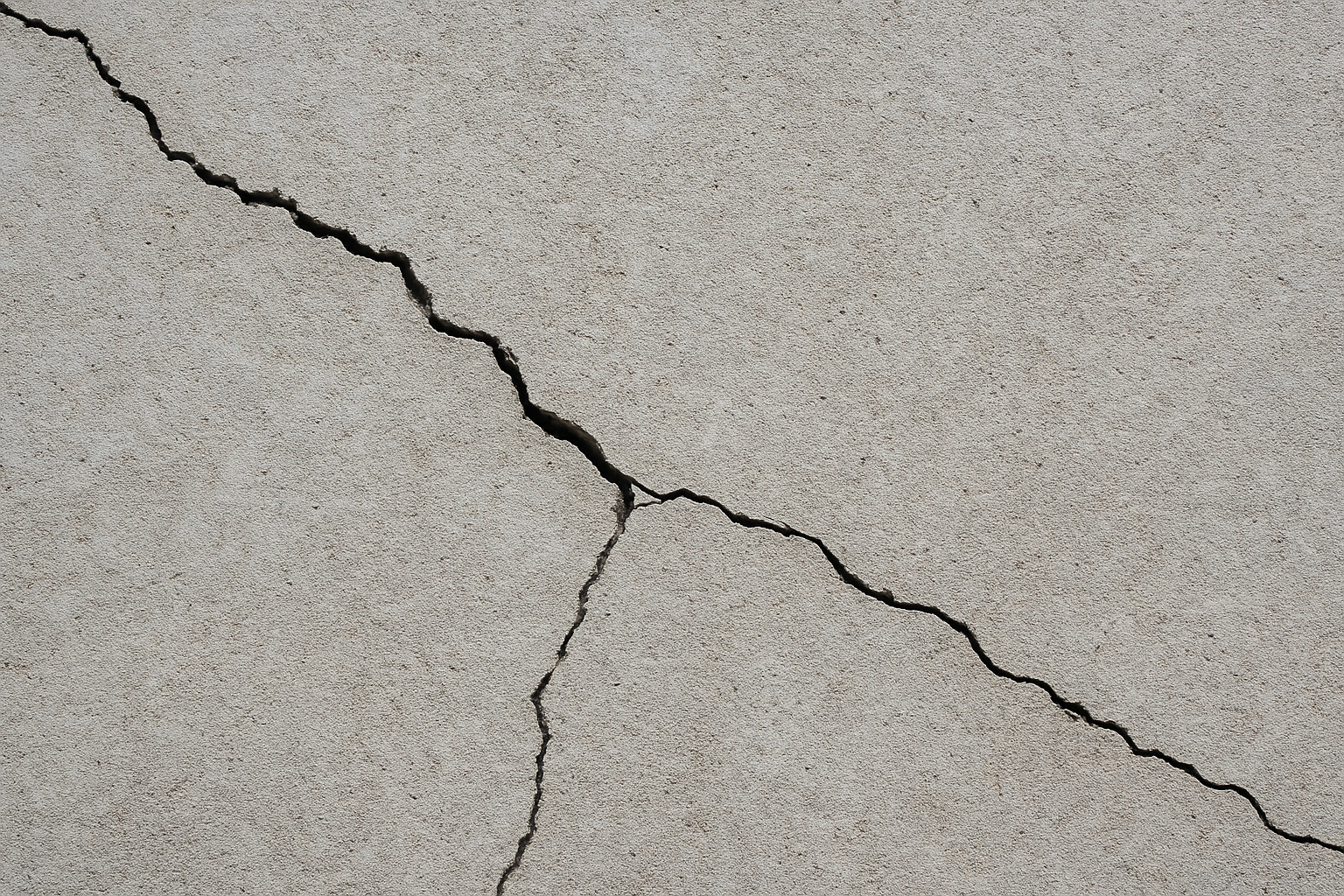
Small cracks are often among the earliest visible indicators. However, their appearance alone does not always reveal the seriousness of the problem. Crack direction, location, depth, movement, and progression can provide useful information about potential causes.
Other warning signs include crumbling edges, surface flaking, exposed aggregate, discoloration associated with moisture, uneven slabs, and areas that feel unstable under normal use. Water that remains on the surface after precipitation can also indicate drainage or grading concerns.
Property owners should pay attention to changes rather than relying only on a single inspection. A defect that repeatedly expands or returns after temporary treatment deserves closer evaluation.
What happens during a professional assessment?
A professional assessment normally begins with an examination of the visible condition. The technician may inspect cracks, edges, joints, slab alignment, surface texture, moisture exposure, drainage, surrounding soil, and previous repairs.
The assessment should also consider how the concrete is used. A residential walkway, commercial loading area, patio, and foundation-related surface may experience very different stresses. The intended function can influence the appropriate repair method.
The objective is to determine the source and extent of deterioration. This makes it possible to distinguish between localized surface damage and conditions that may require more extensive intervention.
Why should the underlying cause be identified?
Repairing visible damage without understanding its cause can result in recurring problems. For example, a crack associated with movement may reopen if the movement remains unresolved. Similarly, moisture-related deterioration can continue if water repeatedly reaches the same vulnerable area.
Underlying conditions may include drainage issues, soil settlement, thermal movement, excessive loading, deteriorated joints, or installation-related weaknesses. Not every problem can be corrected through the same repair material or technique.
A professional assessment creates an opportunity to address both the visible defect and contributing conditions. This is one of the most important differences between a thoughtful restoration process and a purely cosmetic treatment.
When is concrete resurfacing appropriate?
Resurfacing may be considered when the underlying concrete remains sufficiently stable but the surface has experienced localized deterioration. It can improve appearance and functionality while extending the useful service life of an otherwise sound surface.
However, resurfacing is not suitable for every situation. Major movement, extensive structural deterioration, severe settlement, or widespread instability may require a different solution.
The existing concrete should therefore be evaluated before resurfacing is selected. A professional can determine whether the substrate is strong enough to support a new surface layer and whether other repairs should be completed first.
What is involved in repairing concrete cracks?
Crack repair begins with understanding the nature of the crack. Professionals consider its location, size, direction, depth, and apparent movement before choosing a suitable method.
The affected area generally needs to be cleaned and prepared so loose particles and contaminants do not interfere with bonding. Depending on the repair system, the crack may then be filled or treated using a compatible material.
The purpose is not simply to conceal the crack. A good repair considers moisture resistance, movement, adhesion, surrounding concrete condition, and expected exposure. The correct technique depends on the circumstances of the individual surface.
Why can poorly executed repairs fail?
Concrete repair requires more than applying a product over damaged material. If the substrate is not adequately prepared, the repair may have difficulty bonding. If unstable concrete remains underneath, the repaired section may deteriorate along with it.
Incorrect material selection can also create compatibility problems. Environmental conditions during application and curing can influence performance, while unresolved drainage or movement can continue stressing the repaired area.
Professional workmanship reduces these risks by treating preparation, material selection, application, and curing as connected stages of the process.
Does concrete repair require specialized equipment?
The equipment required depends on the type and scale of deterioration. Professional work may involve tools for cleaning, removing deteriorated concrete, preparing surfaces, managing cracks, mixing repair materials, and finishing the restored area.
Using suitable equipment helps improve precision and consistency. It can also make it easier to remove weak material without unnecessarily affecting surrounding concrete.
Equipment alone, however, does not determine repair quality. Experience is important because professionals must understand how and when different tools should be used. Proper technique remains central to achieving a durable result.
How can moisture affect repaired concrete?
Moisture can influence both existing deterioration and new repair work. Persistent water exposure can contribute to cracking, surface damage, corrosion-related concerns in reinforced concrete, and weakening of vulnerable areas.
During repair planning, professionals may consider where water originates, how it reaches the concrete, and where it drains. If moisture is repeatedly entering the same area, repairing the surface without improving water management may provide only temporary relief.
Effective maintenance therefore involves both concrete care and environmental management. Keeping drainage paths clear and reducing unnecessary standing water can support the long-term condition of repaired surfaces.
Is concrete repair mainly about appearance?
Appearance is important, particularly for residential and commercial properties, but reliable concrete restoration involves much more than aesthetics. Damaged concrete can affect walking surfaces, vehicle access, drainage, cleanliness, and overall property presentation.
Uneven or deteriorated surfaces may also become harder to maintain. Cracks can collect dirt and moisture, while broken edges can continue deteriorating when exposed to weather and traffic.
Professional repair seeks to restore practical performance as well as visual condition. The best outcome is a surface that looks appropriately finished while also being prepared for its intended use.
How does seasonal planning affect concrete repair?
Seasonal conditions can have a significant influence on repair work. Temperature, precipitation, moisture, and freezing conditions can affect application and curing.
A professional contractor considers environmental conditions when planning the repair. Suitable materials and procedures must be selected according to the specific circumstances, while newly repaired areas may require protection during curing.
Seasonal planning is particularly relevant in Winnipeg because weather can change substantially throughout the year. Proper preparation helps reduce avoidable complications and supports more consistent results.
What role does preventative maintenance play?
Preventative maintenance allows property owners to identify problems before they become extensive. Routine observation can reveal developing cracks, damaged joints, drainage concerns, and surface deterioration.
Keeping concrete clean, directing water away from vulnerable areas, monitoring changes, and responding to defects promptly can all support long-term performance. Maintenance should also account for the specific purpose of the concrete surface.
Preventative attention is especially useful after professional repairs. Following recommended care practices can help preserve the repaired area and make future deterioration easier to identify.
How should property owners choose a reliable repair professional?
Property owners should consider whether the service demonstrates a clear understanding of concrete behavior, local environmental conditions, preparation requirements, and repair methods. A professional should inspect the problem rather than immediately recommending a generic treatment.
Clear communication is also important. The contractor should explain what appears to be causing the deterioration, what repair approach is appropriate, how the work will be performed, and what maintenance may be required afterward.
Good workmanship should be supported by realistic expectations. Concrete performance depends on its environment and underlying condition, so responsible professionals avoid guarantees that ignore these factors.
What makes a concrete repair project successful?
A successful project begins with accurate diagnosis and continues through careful preparation, suitable material selection, skilled application, proper curing, and appropriate maintenance. Each stage influences the final outcome.
The most dependable repair is one that addresses the actual needs of the concrete rather than simply treating the most visible defect. This approach can improve functionality, appearance, and resistance to future deterioration.
For Winnipeg property owners, professional concrete restoration is a practical part of responsible property care. With timely assessment and appropriate workmanship, damaged surfaces can be restored thoughtfully while contributing to safer, cleaner, and more dependable property environments.
What You Need to Know
- Concrete is durable but can deteriorate due to environmental exposure, moisture, and movement.
- Winnipeg’s seasonal climate creates cycles of freezing and thawing that can lead to concrete cracking and weakening.
- Early warning signs that concrete needs repair include small cracks, crumbling edges, surface flaking, and moisture discoloration.
- A professional assessment of concrete includes inspecting visible conditions, surrounding environment, and intended use to determine the extent of damage.
- Repairing visible cracks without understanding underlying causes can lead to recurrence of issues, as movement or moisture problems may persist.
- Concrete resurfacing is appropriate when the underlying structure is stable but the surface shows localized deterioration; however, it is not suitable for extensive structural issues.