
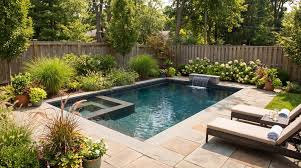
A pool-only contract can make sense when the wider backyard project already has a design and a clear plan for the surrounding work. Before choosing that route, identify who owns the decisions outside the pool. The smaller construction scope does not make the rest of the yard disappear; it changes which parts the homeowner must have arranged elsewhere.
A smaller contract still belongs to a complete project
Start by describing the finished property you want. Include the patio, landscape, enclosure and other relevant elements as well as the pool. Then identify which parts are already satisfactory, which will be changed and which require professional assessment. A pool-only scope should be selected in the context of that full picture, not simply because its title sounds less involved.
There are sensible reasons to divide a project. A homeowner may already be working with a landscape designer whose plan they value. A landscaper may have an established role in a larger garden renovation. In these situations, choosing a specialist pool construction scope can be a way to add the pool to an existing project structure.
The same choice can be less straightforward when the owner has only a collection of inspiration photographs. Those images may communicate taste, but they do not settle the relationships between the pool, access, surrounding surfaces and site conditions. Before seeking a narrowly defined construction contract, determine whether the project still needs a broader design stage.
Do not assume the narrower contract automatically produces a lower complete-project cost. The total depends on the work required and the arrangements made for all of it. Compare the complete scopes, including the work assigned elsewhere, rather than comparing the pool-only number with a proposal for a finished yard. The useful question is whether the delivery arrangement fits the project.
Think about the owner’s available time as well. Some households want to remain closely involved in coordinating separate providers. Others prefer a more consolidated arrangement. Neither preference establishes construction quality, but it affects the experience of commissioning the work. Be honest about how much attention you can give decisions during an ordinary working week.
Examine the decisions already made outside the pool
Review the existing design with the professional who prepared it. Ask which elements have been resolved and which are still conceptual. A drawing can look complete while material selections, technical information or approvals remain outstanding. Establish what the pool builder would receive at the start of its scope and what further work is required before that information is ready.
Jameson Pool & Spa describes its Just The Pool programme as pool construction for an existing landscape design or a project with an outside landscaper. That is a relevant route to discuss when the broader project already has those resources. Confirm the exact scope for your property instead of assuming the programme’s name answers every responsibility question.
Look beyond whether a landscaper has been chosen. Establish whether that party has accepted the specific surrounding work and understands the intended pool project. A company that maintained the garden last year is not automatically responsible for building the new patio. Existing familiarity is helpful, but the new scope still needs to be discussed and documented. Include the expected start conditions and current availability in that conversation, so an assumed future commitment does not become the basis of the pool contract.
Identify who will make design decisions that cross several elements. If the pool’s position changes, who will reconsider the patio and planting arrangement? If a selected surface changes, who will review its relationship to the pool edge? These questions reveal whether design leadership exists, which is a different issue from whether individual contractors are available.
Approvals and professional assessments also need clear ownership. Ask the team which documents are required for the property and who prepares and submits them. Avoid treating paperwork as a minor final task after the contract decision. The owner should understand the process and the dependencies without being expected to become the technical designer.
Recognize when the wider yard needs a single design conversation
If the pool size, seating arrangement, privacy and access route are all still unsettled, gather those questions into one design discussion. They influence one another. Deciding them through separate quotations can leave each provider pricing a different interpretation of the project. A broader design stage can establish a common brief before construction scopes are compared.
That design conversation should include what the household wants to keep. Existing patios, valued garden areas and familiar views can shape the available choices. The purpose is not to maximize the amount of new work. It is to understand the whole setting well enough to decide which work is needed and how the pool should relate to it.
Ask how the proposed delivery route handles decisions still awaiting information. The answer may support a pool-only contract, a broader design-build arrangement or additional preparation before either is appropriate. A useful provider can explain its own scope and where another professional is needed. Be wary of filling a gap in responsibility with an assumption that someone will handle it.
Once the route is chosen, obtain a proposal that reflects it accurately. The project description, drawing references and exclusions should tell the same story. If the household changes its mind about the surrounding yard, revisit the scope rather than expecting the original pool-only arrangement to absorb a materially different project without discussion.
Try writing one truthful sentence about the finished backyard: this person is responsible for the design, this party builds the pool, and the surrounding work belongs to these agreed providers. If that sentence contains an unnamed someone, the procurement decision needs another conversation before it is ready.

